Whoa!
I’m biased, but browser extension wallets changed everything. They put keys at your fingertips and gas controls in your hands, which is amazing and also a little terrifying. Initially I thought extensions were a convenience only—fast, slick, frictions removed—but then I watched a friend lose funds to a phishing popup and my instinct said: hold up. Actually, wait—let me rephrase that: convenience and risk are married in this space, and you gotta decide how to live with both.
Really?
Yes. Extensions are everywhere now, from Silicon Valley projects to tiny teams in Eastern Europe. They bridge web apps and blockchains more smoothly than hardware wallets alone can, which is why most active DeFi users keep one handy. On one hand, that ease lowers barriers for experimentation. On the other hand, the attack surface expands—browser permissions, malicious websites, and bad UX can all trick you into approving things you didn’t mean to.
Here’s the thing.
Let me be blunt: not all extensions are created equal. Some are open source and audited; others are… not. My first impression of many wallets was „polished,“ but polishing doesn’t equal safety. So I started auditing my own habits instead of relying solely on labels, and that changed how I recommend tools to people. It also made me realize that small behaviors—like always checking the domain and never auto-approving transactions—prevent a majority of common failures.
Hmm…
Think of an extension wallet as a tiny bank that lives inside your browser. It holds keys, signs transactions, and interacts with smart contracts directly from webpages. That means it needs the same hygiene as any financial product: compartmentalization, strong authentication, and periodic audits (of the code and of your own habits). On the technical side, look for features like transaction simulation, approval revocation, and hardware-wallet integration—these cut down risk in practical ways.
Seriously?
Seriously. One practice I recommend: use separate browser profiles or even separate browsers for different wallet accounts. Keep your „big money“ cold on hardware and use an extension for smaller, active positions. This reduces blast radius if an extension is compromised. Also, use wallets that give you granular approval control so you never sign a blanket token approval accidentally—those are a common attack vector.
Whoa!
Here’s a concrete checklist that I use, and I mean I actually follow it: minimize permissions, limit connected sites, revoke token approvals regularly, enable hardware confirmations where possible, and keep a browser dedicated to DeFi interactions. These seem small. They really add up though. When you combine them, the odds of falling for typical scams drop a lot.
Really?
Yes—also, check developer reputation and open-source status. If a wallet publishes code, independent reviewers can poke at it; if a wallet is opaque, assume more risk. Initially I favored „new, shiny, fast“ projects, but over time I shifted to those with active communities and decent audit trails. On top of that, community-maintained tools for revoking allowances and simulating transactions offer an extra safety layer that many wallets now integrate.
Here’s the thing.
When you install an extension, read the permissions dialog slowly. Don’t rush past „read and change all your data on websites you visit“ without considering the implications. That phrasing is scary for a reason—extensions with broad host permissions can inject scripts into pages or scrape sensitive data. Use host-restriction features where available, and when in doubt, uninstall and reinstall after checking settings—sounds tedious, but it’s a good habit.
Hmm…
A practical tip: test with tiny amounts first. Send small test transactions to confirm gas settings, nonce behavior, and how the wallet displays contract calls. Watch how the wallet labels the transaction—does it show the contract ABI-decoded action or just raw hex? Some wallets do a good job explaining what you’re approving, which matters when interacting with complex DeFi protocols. If something looks like „low-level contract interaction“ with no human-friendly label, pause and investigate.
Whoa!
Look, I’m not saying one wallet is the end-all. I’m saying pick a setup that matches your risk tolerance and use case. For active DeFi players who need gas fee management, multiple accounts, and contract simulation, a quality extension can be indispensable. For long-term holders with large balances, cold storage plus a cautious extension workflow is smarter. My gut feeling after years in the space? Most losses come from social engineering, not cryptography failures—so training your behavior beats relying on magic.
How I Approach Choosing an Extension Wallet
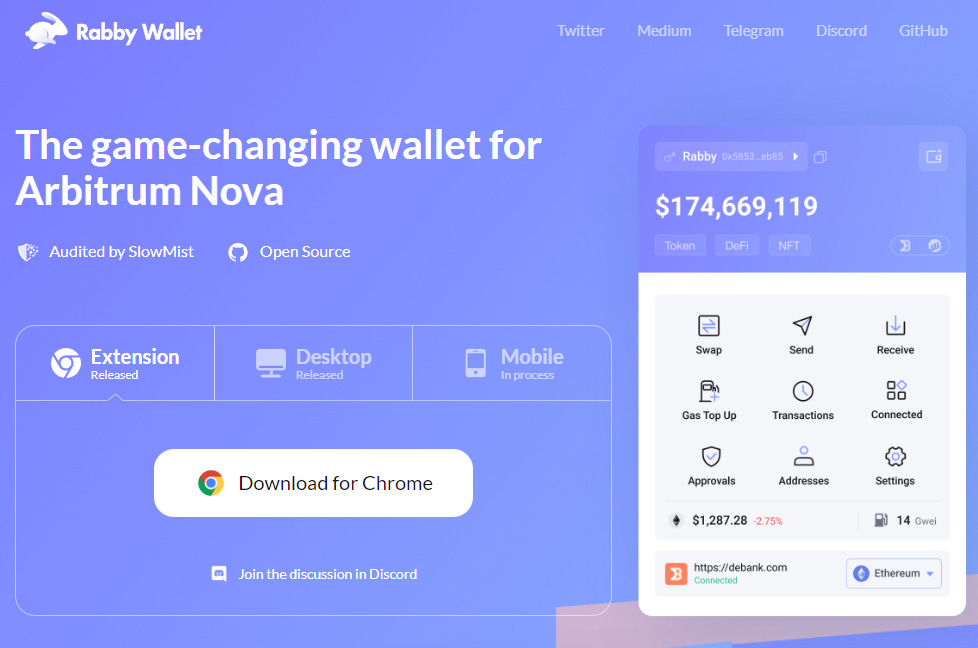
Okay, so check this out—features matter, but priorities matter more. First, prefer extensions with hardware wallet support and clear UI for contract calls. Next, look for transaction simulation and approval management built into the extension; those features have saved me more than once. Finally, community trust and transparency (issue trackers, audits) are big flags. If you want a starting point, consider verifying a trusted download source like the one linked here: rabby wallet download—I’ve used it for session-based activity and appreciated its approval flow, though I’m not 100% sure it’s perfect for everyone.
Really?
Yes—Rabby, for example, focuses on managing contract approvals and simulating transactions ahead of signing, which addresses two huge pain points in DeFi operations. That design choice reduces accidental infinite approvals and gives users context about what a signed interaction will do. On the other hand, no tool eliminates risk completely, and every extension can be misused if the user is tricked by a malicious dApp or phishing page. So combine solid tooling with good habits.
Here’s the thing.
Security isn’t just software—it’s also environments and procedures. Keep one browser for day-to-day browsing and another for DeFi. Lock down the DeFi browser: disable unnecessary extensions, enable strict tracker blocking, and consider a dedicated OS profile or virtual machine for high-value operations. These steps take effort but they dramatically lower the chance of a catastrophic compromise—think of it as layering your defenses like a captain shoaling through rocky water slowly and carefully.
Hmm…
On gas and UX: a good wallet shows estimated gas, lets you speed up or cancel, and provides clear warnings for contract interactions. Avoid wallets that hide the destination contract or which present raw data without context. My instinct used to be „faster is better,“ but I’ve learned that slower confirmations and clearer meta-data are worth the time when money is on the line. Also, watch out for wallet popups that mimic site UIs—phishers love that trick.
Common Questions
How do I recover if I suspect my extension is compromised?
First, disconnect and remove the extension immediately. Next, move funds from any compromised account to a fresh wallet that you control (preferably hardware-backed). Revoke approvals for the compromised address using a reputable revocation tool, and rotate any linked services or keys. I’m not 100% certain every step covers every edge case, but this sequence covers the typical scenarios.
Should I use multiple extension wallets?
Yes—use multiple wallets for compartmentalization. Keep small, active funds in an extension for trading and yield, and store larger amounts in hardware or cold storage. That way, a single compromise only impacts a slice of your holdings rather than everything. Also, having a dedicated „sandbox“ wallet for new dApps reduces mental overhead and keeps things tidy.
Schreibe einen Kommentar